
FIVE YEARS ON
A Print Sale
for Afghanistan
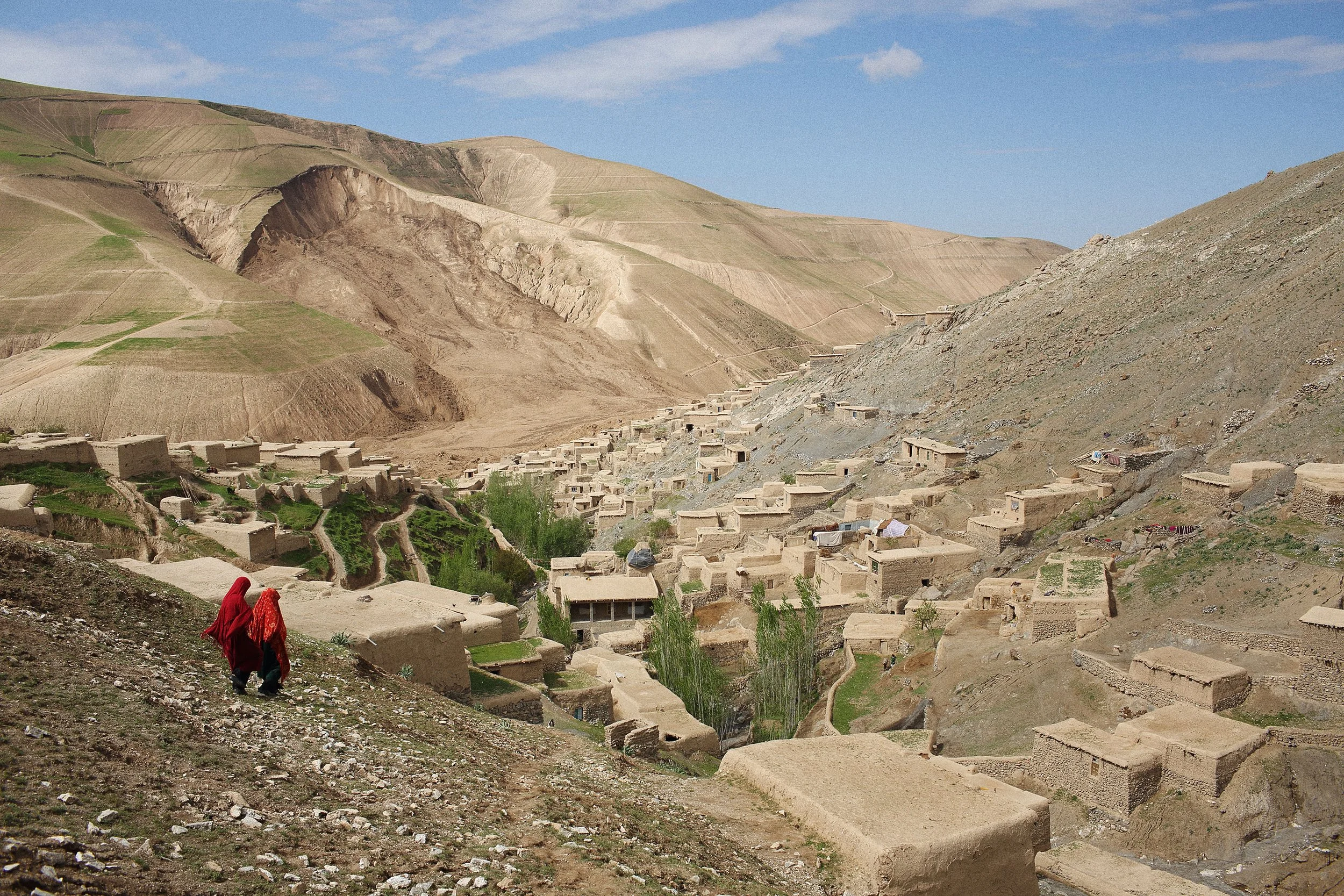
It’s been five years since the takeover. The headlines have moved on. Afghanistan hasn’t.
- 4th to 18thSeptember 2026
- €100Per print
- 6Photographers
- 100%Funds training
Buy a print, fund a future
At Artijaan, we've stayed on the ground since day one working with over 3,000 makers, 80% of them women, building real, sustainable livelihoods.
To mark this anniversary, we wanted to do something simple: keep the conversation about Afghanistan alive. And we wanted to do it through images. After all, a picture tells a thousand words, but it also carries stories which go far beyond words.
A limited print sale, September 9th - 23rd
We asked photographers who've spent time in Afghanistan to each donate one photograph—an image that has stayed with them—along with a few words on why. Their images make up a curated collection of limited run prints, available for two weeks only.
Each professionally produced high quality print costs €100, and the sale directly funds a woman's place in our artisan training programme.

Where your money goes
All proceeds from the sale will go directly towards the cost of training female artisans in Afghanistan. These are women who carry ancestral craft heritage passed down through generations, yet are unable to work in the public sphere due to current restrictions. Our training helps them to refine their craft and be able to sell directly to the international market, through orders we help them secure—bringing in vital livelihoods to their families and communities in a country facing economic crisis.
By completing our training programme, these women gain access to long-term and dignified work in a context where opportunities for women have almost vanished.
Print selection
Every print you buy is a small, tangible piece of Afghanistan's story — and a direct contribution to the women still writing theirs.
Charles Thiefaine
Charles Thiefaine is a French photographer and independent journalist based in Paris. Since first traveling to Afghanistan and Iraq, he has developed a long-term practice around territories shaped by conflict and political upheaval. His projects have explored the aftermath of violence in Iraq, the 2019 Tahrir protests in Baghdad, and life on Yemen’s Socotra Island, where he documented a community living amid geopolitical tensions.
About the Photo
Taken at the top of the Dragon Valley in the Bamyan region, this photograph shows a family of tourists and a vendor selling sweets from the back of a car.
August 2022
Véronique de Viguerie
Véronique de Viguerie is an award-winning French photojournalist based in Paris. After studying law in France and photojournalism in England, she spent three years living and working in Afghanistan. Since 2006, she has covered stories around the world, including in Iraq, Somalia, Syria, Pakistan, Nigeria, and Mali.
Her work focuses primarily on conflict, political upheaval, and the lives of people affected by instability. Her photographs have been published in The New York Times Magazine, Newsweek, El País, Der Speigel, The Guardian, among others.
About the Photo
Taken in the early morning hours as Veronique was half sleeping in a car on her way to the border, near Pul-e-Charkhi. “I saw these splashes of vibrant color in the morning mist, looking like balloons of hope.”
December 2022
Andrew Quilty
Andrew Quilty is an Australian photographer based in Sydney. He spent nine years living in Afghanistan where he documented the country’s shifting social and political landscape for The New York Times, The Intercept, Le Monde, Der Spiegel, among others.
His work has been recognized with nine Walkey Awards, including the Gold Walkey, the George Polk Award, the Overseas Press Club of America award, and two World Press Photo awards.
About the Photo
“It is equally compelling and conflicting for storytellers and photographers in Afghanistan that beauty and tragedy so often coexist, and even complement one another.”
Badakhshan, May 2014
Mélissa Cornet
Mélissa Cornet is a French photographer, sketch artist, and researcher specializing in human rights and gender. She has spent the last five years in Afghanistan working with various humanitarian organizations. Her photography and sketches are inspired by her travels around Afghanistan and are a way to preserve beloved memories and create a historical record of a turbulent time.
About the Photo
“I always love photographing girls studying, playing, being joyful and ambitious—all things that the Taliban want to take away from them. I hope that in a few years, we will revisit these photos, not believing there was a time when girls were denied their most basic right to education.”
Schoolgirls study in a community-based class in a rural area of Ghazni. 2022.
Emile Ducke
Emile Ducke is a German documentary photographer based in Berlin. He has documented life in the Afghan village of Dah Warda for Die Zeit, Herat’s last glass blowers, among other visual dispatches from across Afghanistan.
In longer-term projects, he has focused on the challenges faced by communities in some of Russia’s most remote areas, with photo-essays published by the Washington Post, National Geographic and Der Spiegel, among others. He has been selected a World Press Photo 6×6 visual storyteller, named one of PDN’s 30 emerging photographers to watch, and awarded the Leica Oskar Barnack Newcomer Award.
About the Photo
“Saadullah and Sanaullah played in front of the mosque in Dah Warda when I took this photo at the end of a sweltering summer day. Their village sits at the edge of the desert in Northern Afghanistan, where wells have to run deep.
Dah Warda has always stood on the brink of extinction. For as long as its residents can remember, the sand has battered the village’s houses, threatening to swallow them.”
June 2025
Victor J. Blue
Victor J. Blue is an American photojournalist and Graduate Director of the Visual Communications program at Ohio University. His work focuses on the legacy of armed conflict and the unequal consequences of politics and policy. He has documented the war in Afghanistan since 2009 as well as stories across the United States, Central America, the Middle East, and elsewhere.
Blue’s photographs have appeared regularly in The New York Times, The New Yorker, Harper’s Magazine, Bloomberg News and The Wall Street Journal. His images have received numerous awards including Pictures of the Year International and NPPA Best of Photojournalism.
About the Photo
Girls gather at the end of recess at the Milad Atal Private School in the Kampani neighborhood of Kabul, Afghanistan, Wednesday, September 8, 2021.
“I made this picture on the outskirts of Kabul just weeks after the fall of the western backed government and the takeover by the Taliban, while reporting on the future of girls education. In many ways, the image represents both resilience and betrayal. Many Afghans at the time hoped that with the end of the war the new Taliban government would moderate some of its worst impulses and allow girls education past the sixth grade—in fact many Taliban officials assured both Afghans and the international community that girls would soon attend school. But Afghans were devastated when, months later the ban became functionally permanent.
As I moved around the schoolyard making pictures I was drawn by the self possession and implicit challenge this young girl confronted me with. She seemed confident of something that was lost on both Taliban officials and western observers like myself—that whatever came next was only a new chapter in the bitter history of the repression of Afghan women. The fighters, the presidents, the diplomats, the warlords, the generals, the politicians, the humanitarians, and the clerics had all failed her. If on that day the future seemed uncertain, if today five years on it seems impossible, I remember her steely determination and I’m reminded that she and others like her are the only ones who will someday establish women’s rights to full participation in Afghan society.”
September 2021
Before your purchase.
When does the sale close?
The sale runs from 10 to 24 August. After that the prints come off sale and are not reprinted, so the edition stays with the people who bought during the two weeks.
When will my print arrive?
Prints are produced once the sale closes, so allow 3 to 4 weeks from 24 August. We ship worldwide.
Is the print signed or numbered?
Every print comes with a small booklet introducing the project, the photographer and the context behind the image. The prints themselves are not hand-signed: the photographer’s signature is reproduced in the booklet.
Do the photographers get paid?
No. Each photographer donated one image so that the full amount funds the training programme. Their names stay with their work, on the print and on this page.
Can I get a tax receipt?
A print is a purchase, not a donation, so it does not come with a tax receipt. If you would rather give directly, our association Khepri issues French receipts. Donate here.