In Conversation: An Afghan Woman’s Journey Across Her Own Country
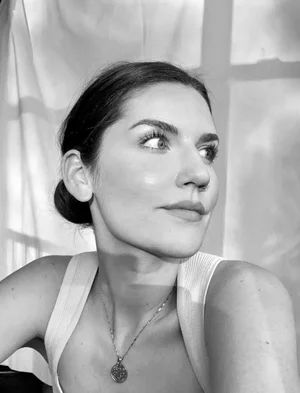
Meet Amina*, a friend of Artijaan and mother from Afghanistan. Earlier this year, she set out on a 10-day roadtrip across the country’s eastern and southern provinces. a journey that would take her far beyond the capital and deep into regions few women are able to see freely.
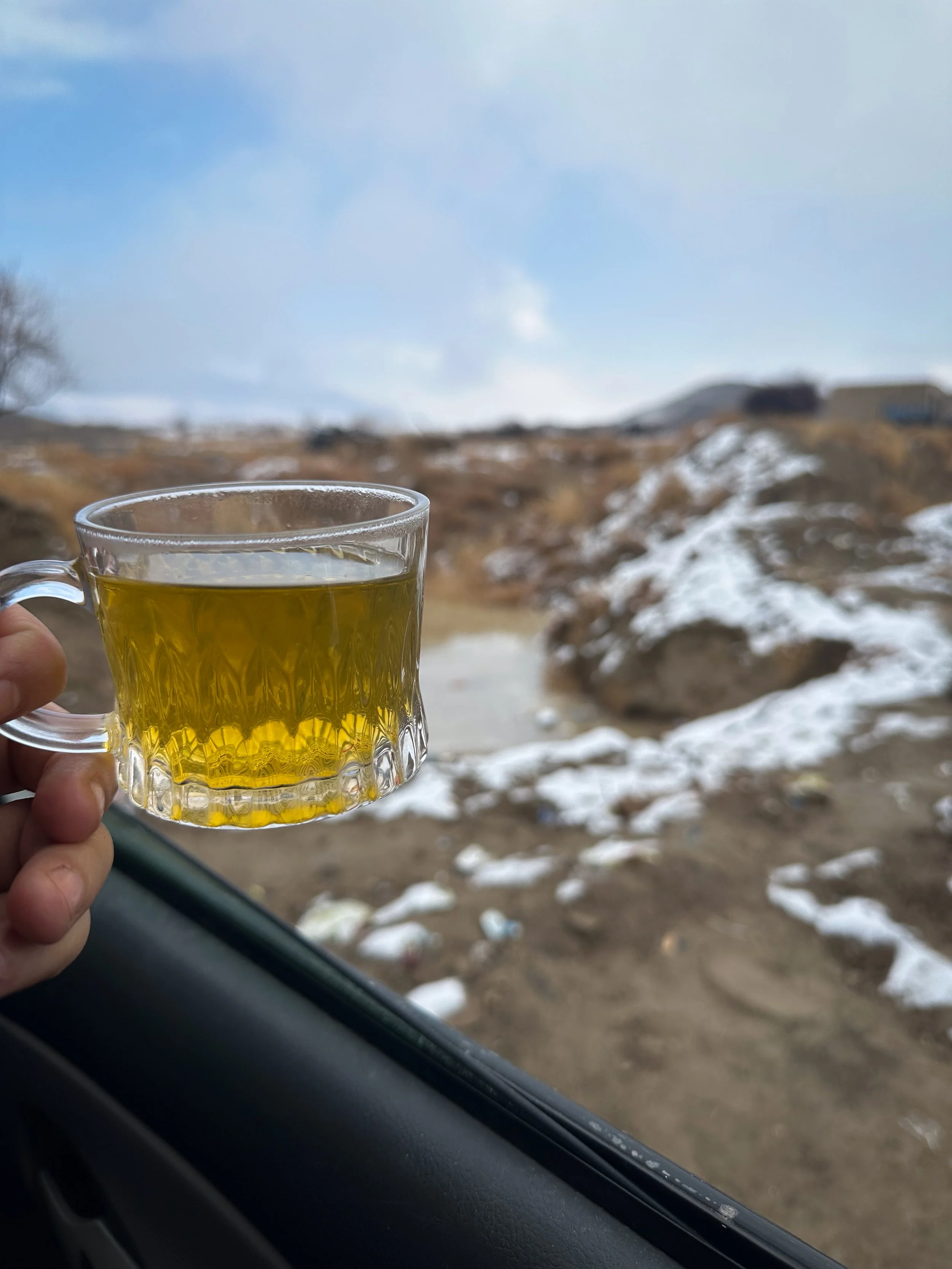
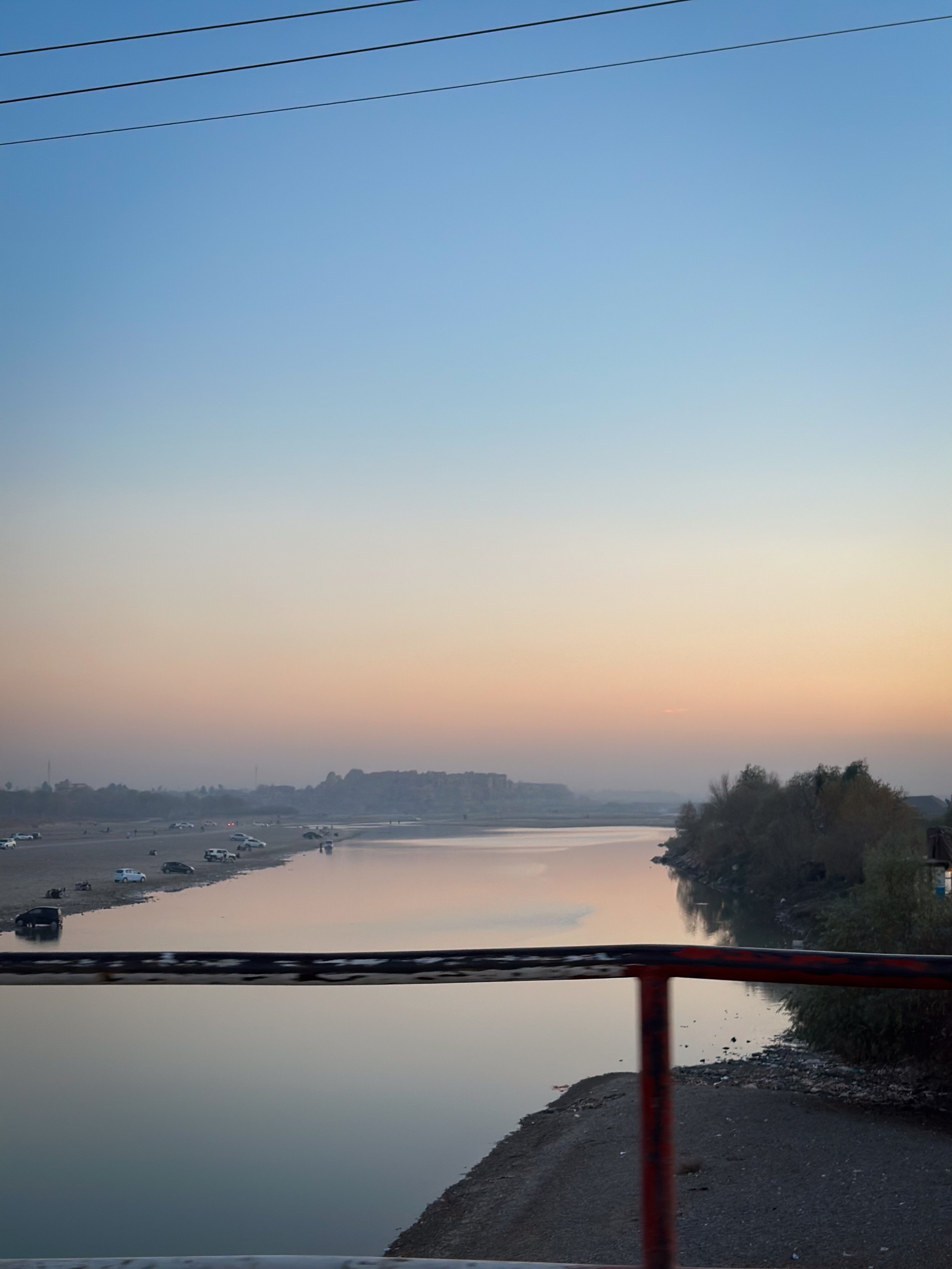
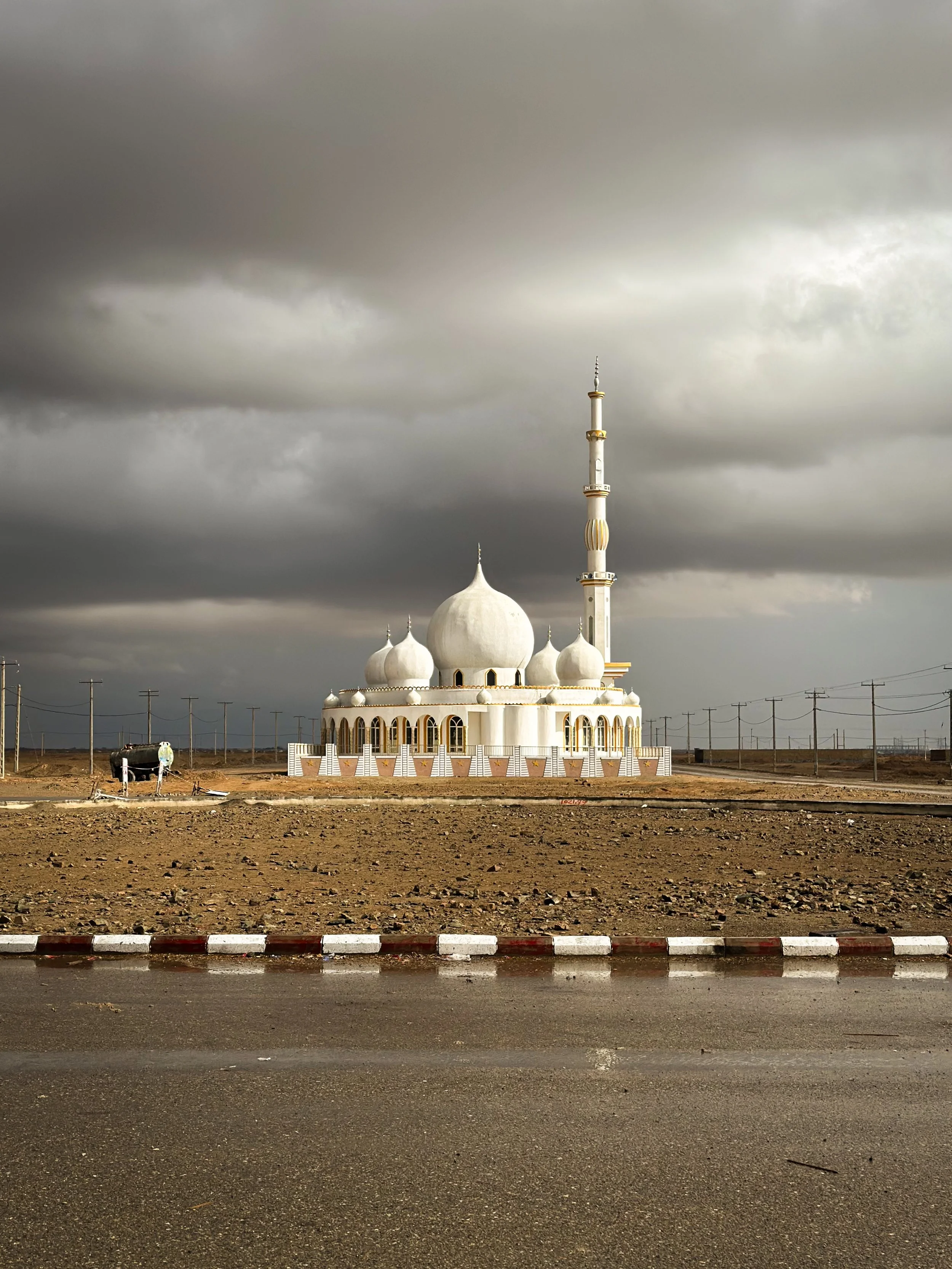
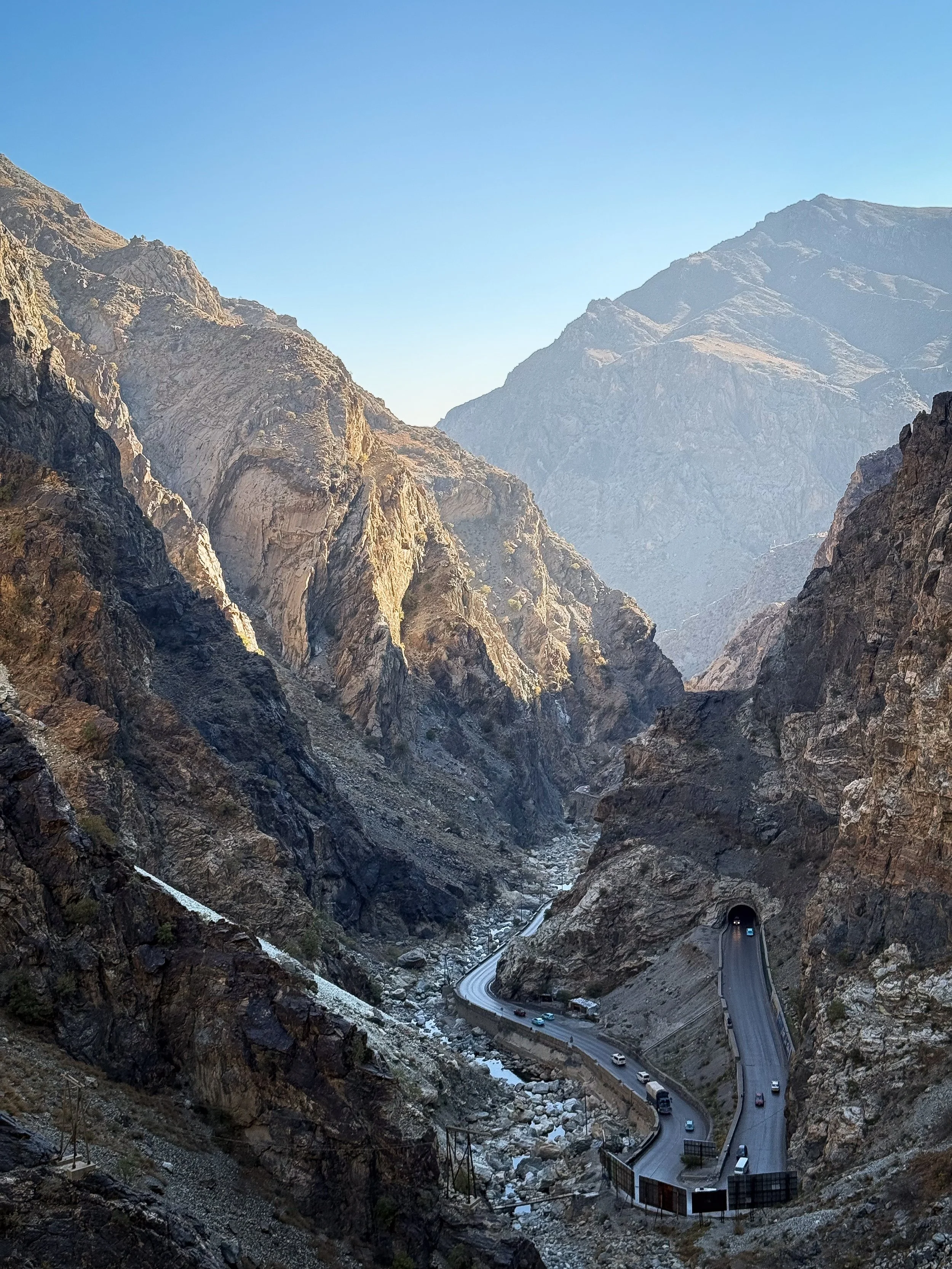
Traveling with her husband and young daughter, she moved by car from Kabul through Nangarhar, Ghazni, Zabul, Kandahar, Helmand, and Nimruz provinces, witnessing firsthand the contrasts that define Afghanistan today.
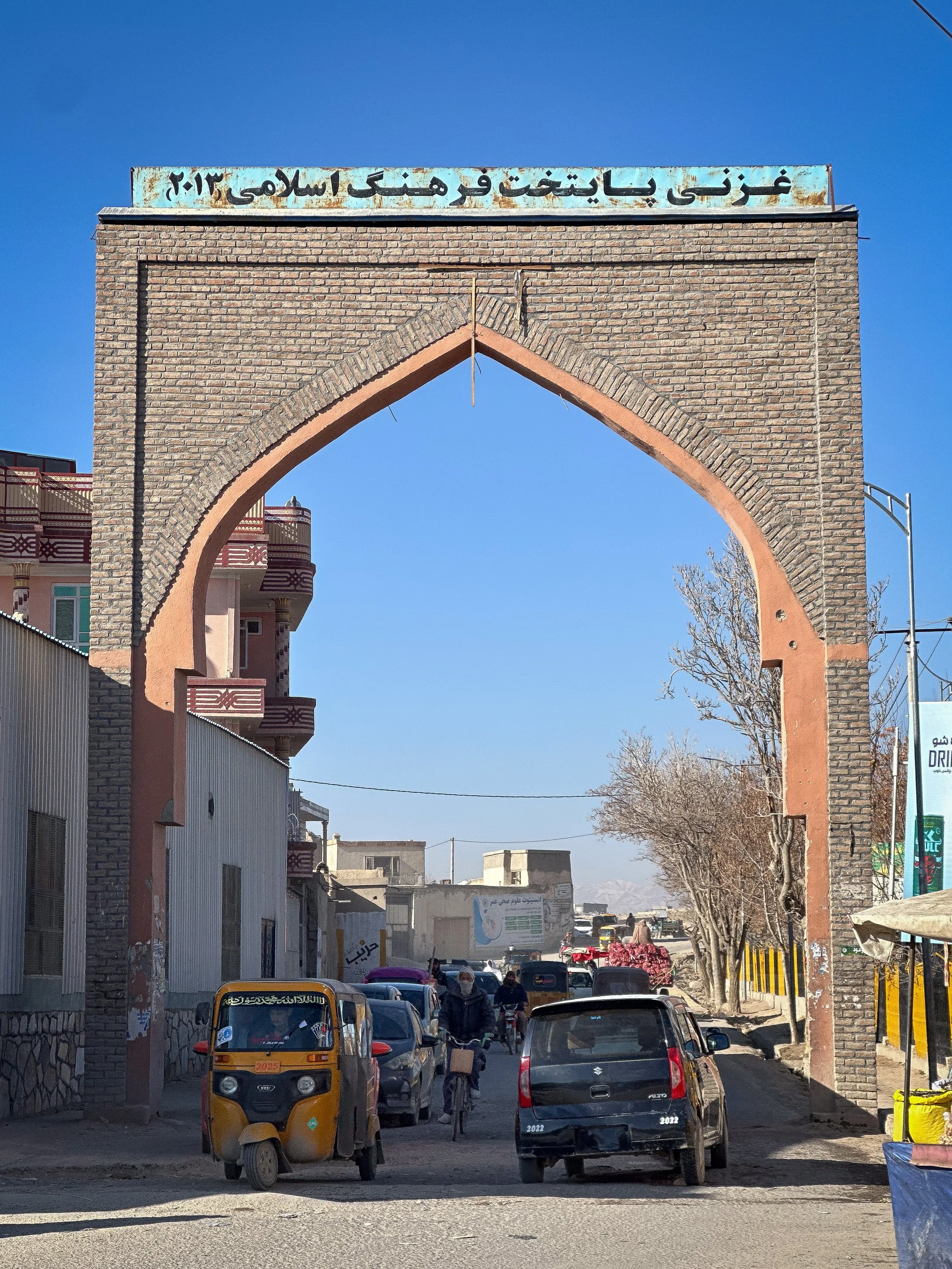
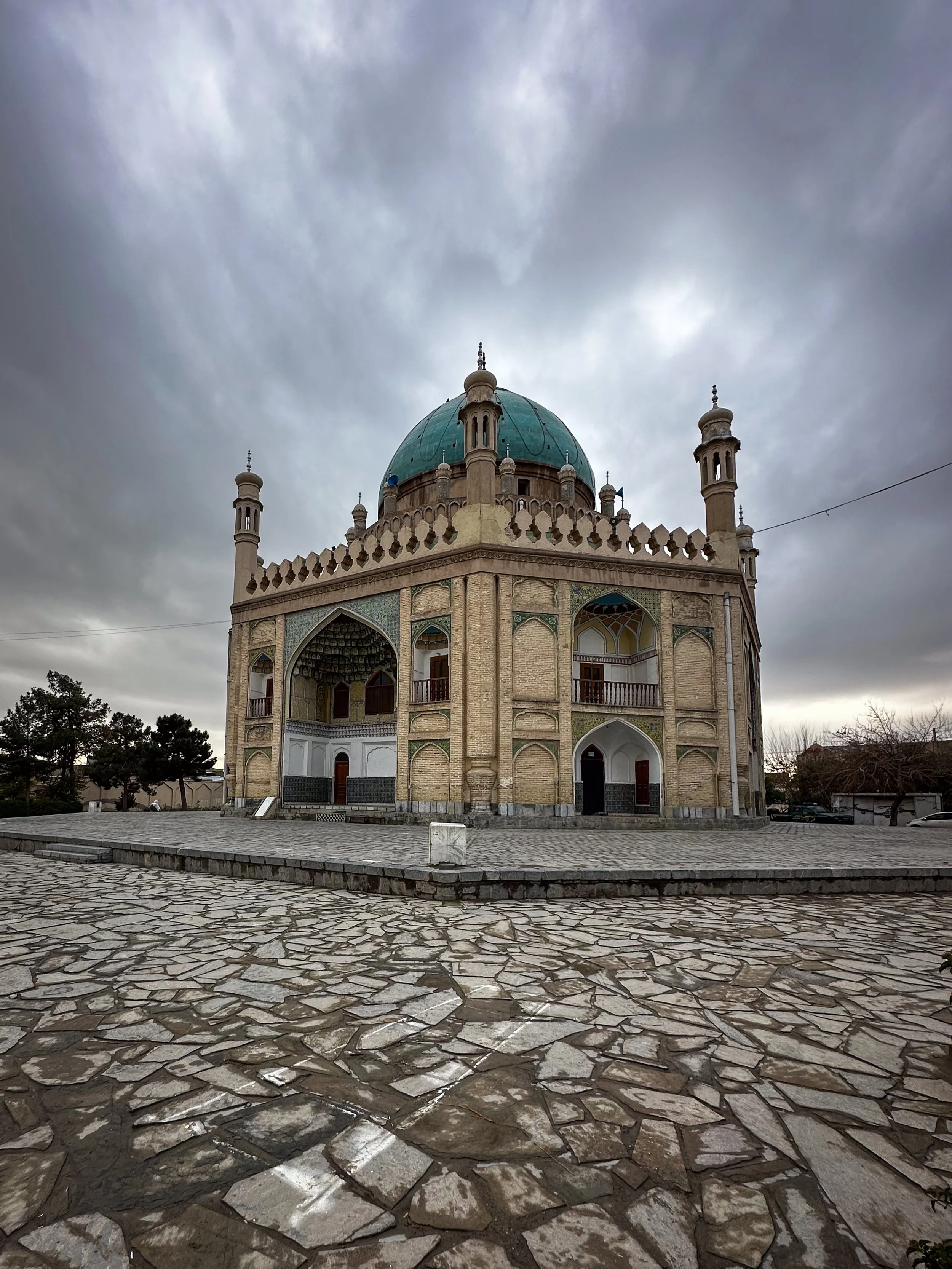
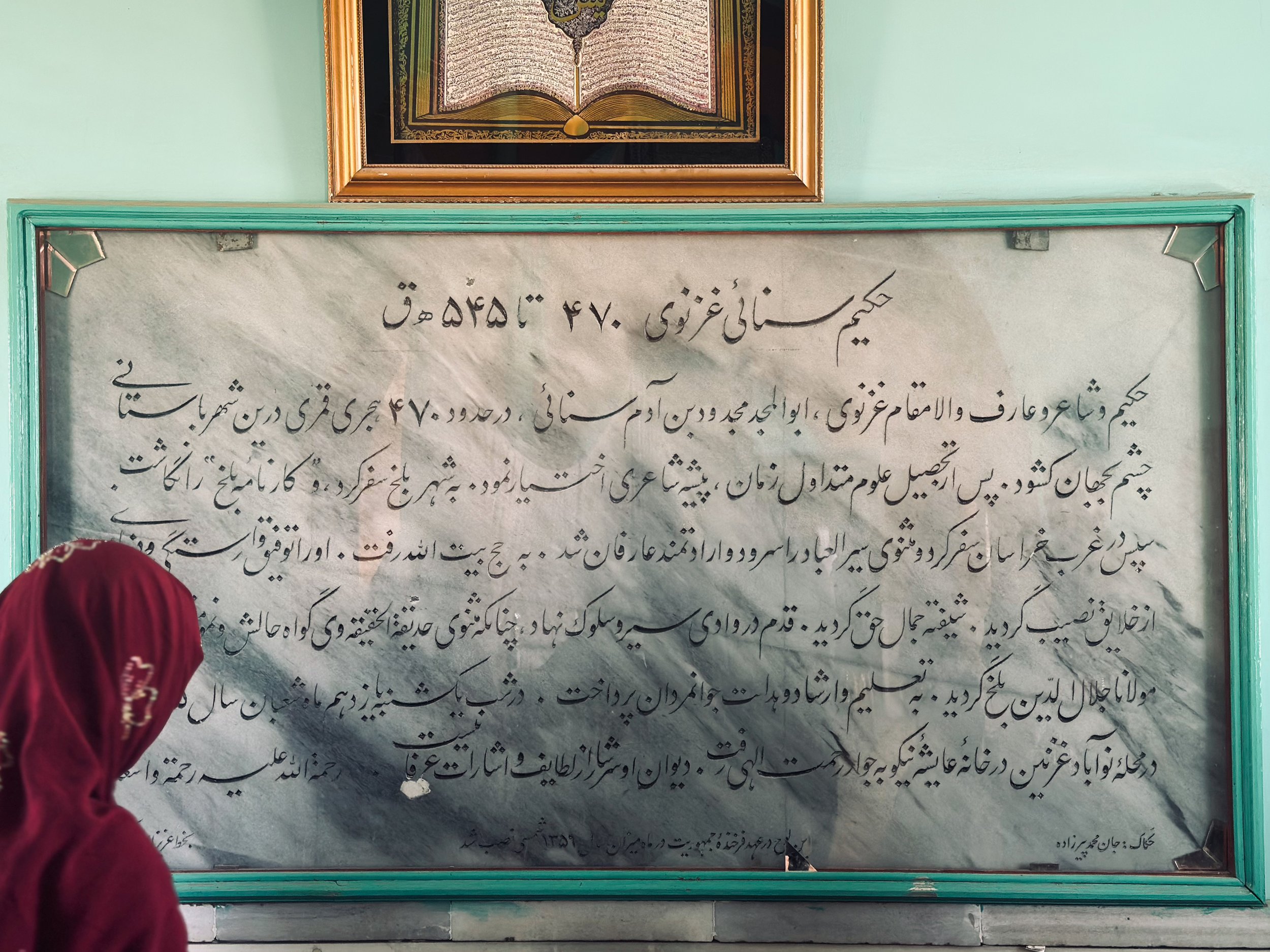
Along the way, she visited historic sites including the grave of renowned Persian Sufi poet, Hakim Sanai, and passed through the city where the Taliban’s leadership is based. What she encountered was complex and often contradictory—an atmosphere of security set against the lingering scars of war, and deep social restriction contrasting moments of unexpected freedom and defiance.
In this conversation, Amina reflects on what it means to be a woman in today’s Afghanistan and why she believes that changing the country requires more than political transformation.
For security reasons, Amina’s name has been changed and identifying details have been limited. Our conversation has been edited for length and clarity.
What inspired you to take this journey across Afghanistan?
I have previously traveled to various provinces across Afghanistan and I always enjoy it so much. It was during these trips that I realized I have this hobby of taking trips to all of Afghanistan’s provinces and meeting lots of people in these places. So far I have been to 24 provinces in total. When my husband and I got some holidays, we decided to take our younger daughter and visit some relatives of his friends in the south-eastern provinces.
Did you notice differences between life in Kabul and the provinces you visited?
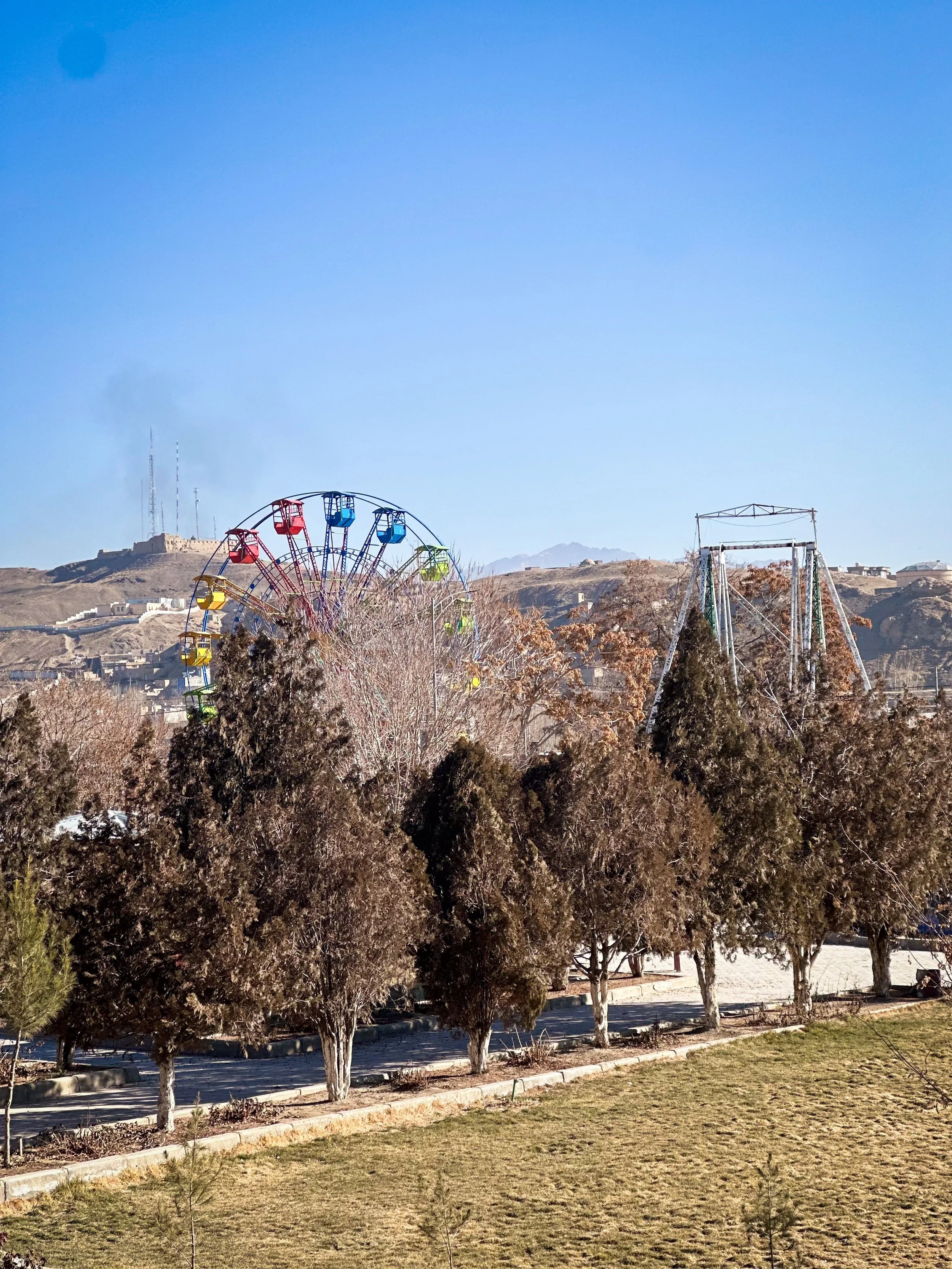
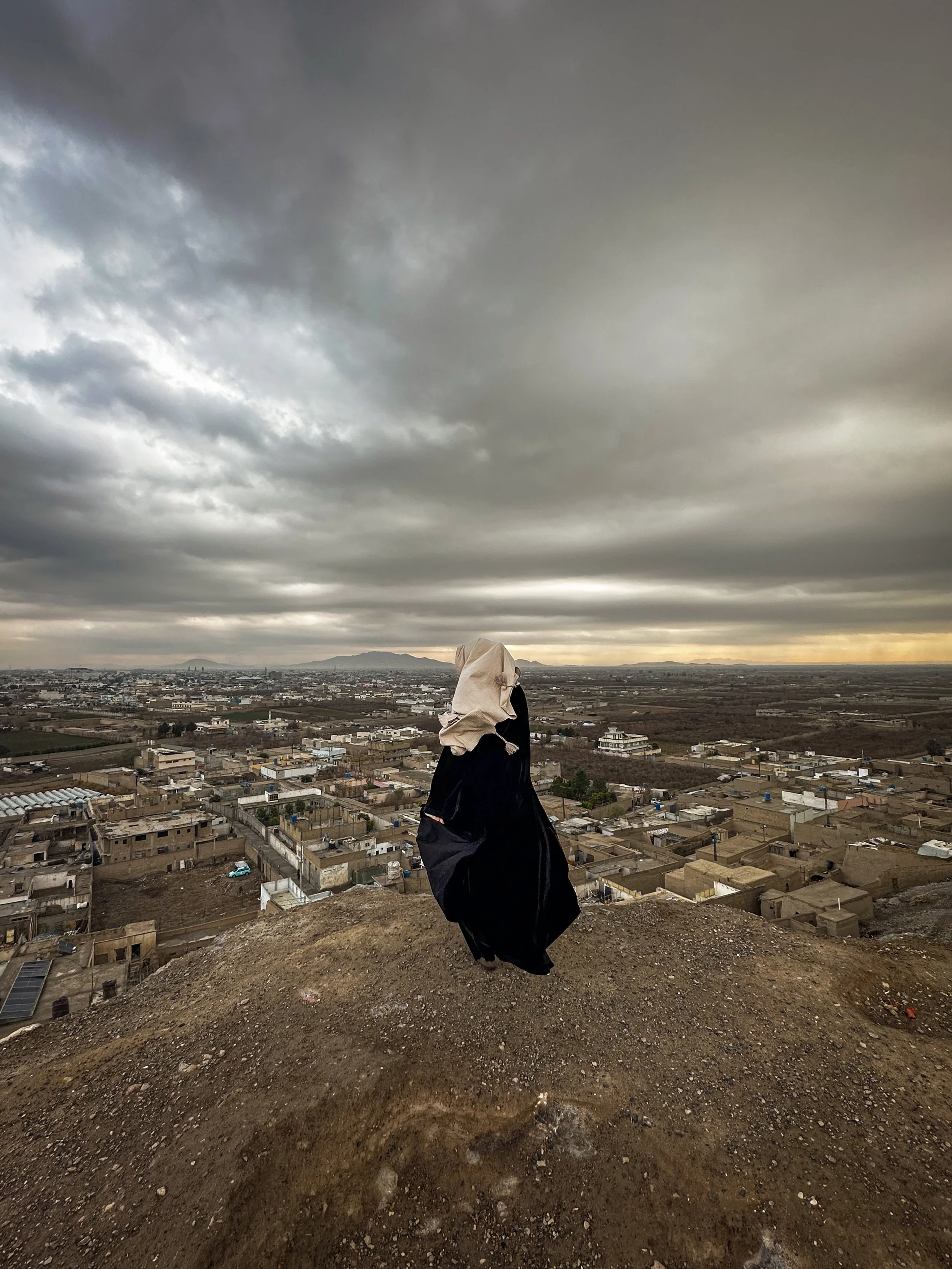
The very strange thing for me was that we couldn’t see a lot of women there. I often was the only woman around, so I felt like the star of an odd film. In Kabul, we have some boundaries about going to parks and mosques, but our families want us to go out. It is the Taliban who will not allow us. But in those provinces, the Taliban does not have to enforce restrictions because the families themselves will not allow their women to go outside. In this way, I didn’t feel the same boundaries as I do in Kabul. Actually, I felt very free.
What was it like traveling as a woman through different parts of the country?
One day we went to the legal border crossing with Iran, and I had this idea to take a video of myself as I walked from Afghanistan into Iran. The Taliban were there and began shouting at me to stop, but I pretended not to hear them. Because I am a woman, they cannot physically touch me, so even as they shouted, I continued with my video.
I think they were shocked—how can a girl do this? I think it was very strange for them to see a phone in the hand of a woman. They don’t have any boundaries or restrictions on these kinds of things until they actually see a woman doing them. When they see it, then they impose a restriction. That’s why, in the five years since the Taliban came, they didn’t put restrictions on women all at once, they added them little by little.
That’s such a striking reflection. After that experience, what else did you notice about daily life for women outside of Kabul?
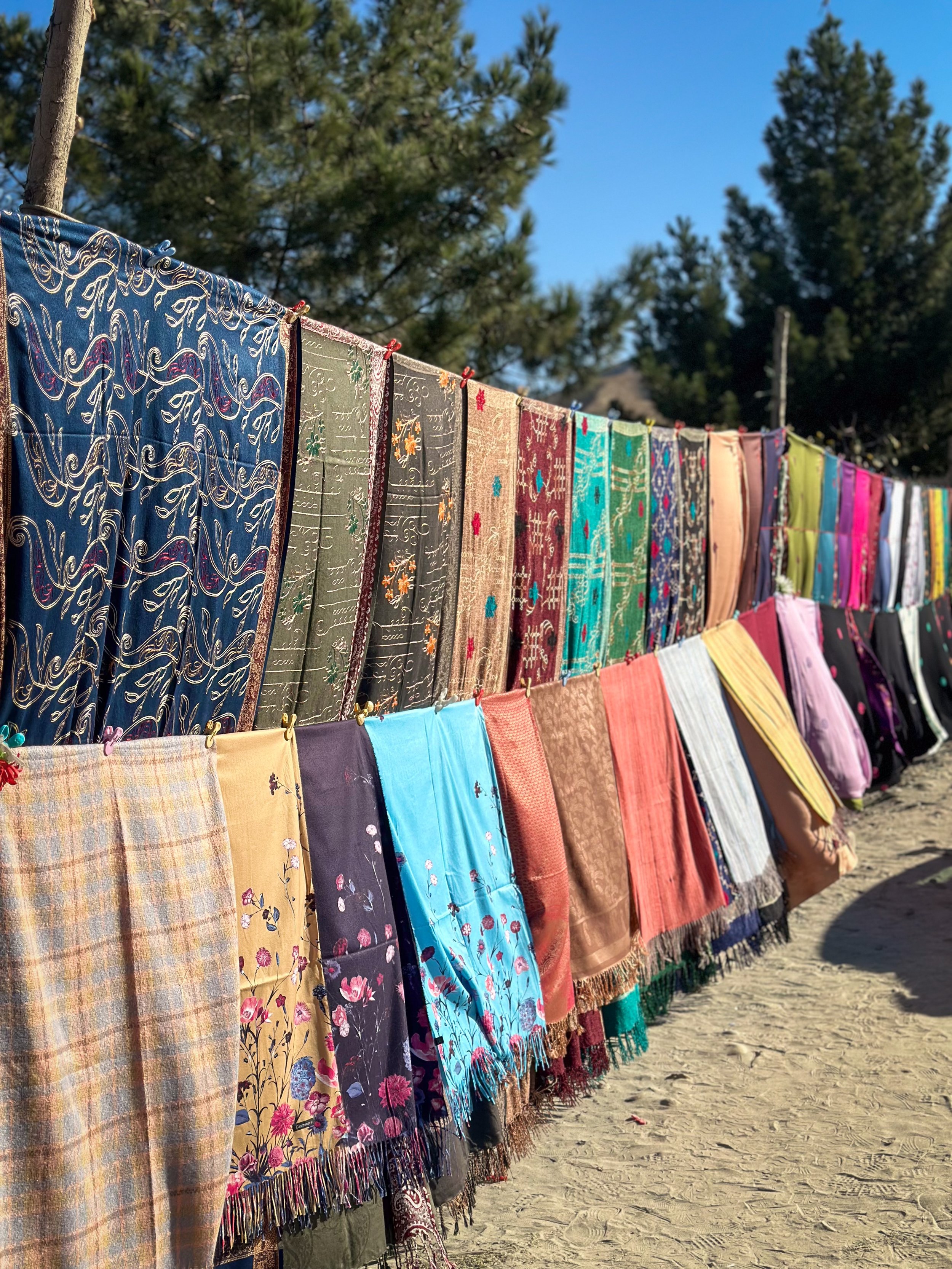
I couldn’t speak with so many people because they are speaking Pashto, and the accent of the people is different from province to province. But I saw their lifestyle, how they feel, and how their mind is. For example, I was in the market shopping for myself and I saw some men choosing colored fabric for their women. The woman cannot say, “I don’t like red, I prefer orange.” Their husband will select whatever and then they have to wear it. They are servants of their men. What their men say, they will do.
Sometimes I am able to talk with these women and they say “Our husbands are our second God. What they say we will accept.” We have a famous saying here in Afghanistan that a woman only goes from her house to her grave. While she is alive, she stays in her home, and the only time she leaves is when she goes to the grave.
Did you see or experience anything unexpected?
When we were in Zaranj district in Nimruz, on the border with Iran, we were approached by some smugglers who take people from Afghanistan into Iran. Many of them came to us asking if we wanted to go and offered to take us. You cannot even stay five minutes somewhere without someone approaching you with this question.
In the evening, while we were looking for a place to stay the night, we saw a small, hired car full of people going to cross the border with Iran. This is a car that usually holds four people, but it had maybe 10 or 11 people inside. They have to pay a lot of money to be taken to the border. There they will be dropped off and then another smuggler will come and take them deeper into Iran.
Was there a specific moment from your journey that affected you the most?
Honestly, almost everything was very good. The roads were very nice and the people were kind. There was no war in any village we went to. When we would arrive in some places, seeing a car was very strange for the people so they would run behind our car and come to us and ask us questions.
In some provinces we went to like Helmand, in the district of Sangin, these places were once the heart of war, and I could see signs of gunshots on the walls of the houses. I could feel the people in these places were very tired and they just wanted us to ask them how they are doing because they experience a lot of bad memories. It seemed like every single house had victims of war. Everyone there had lost someone.
How did traveling with your daughter shape your experience?
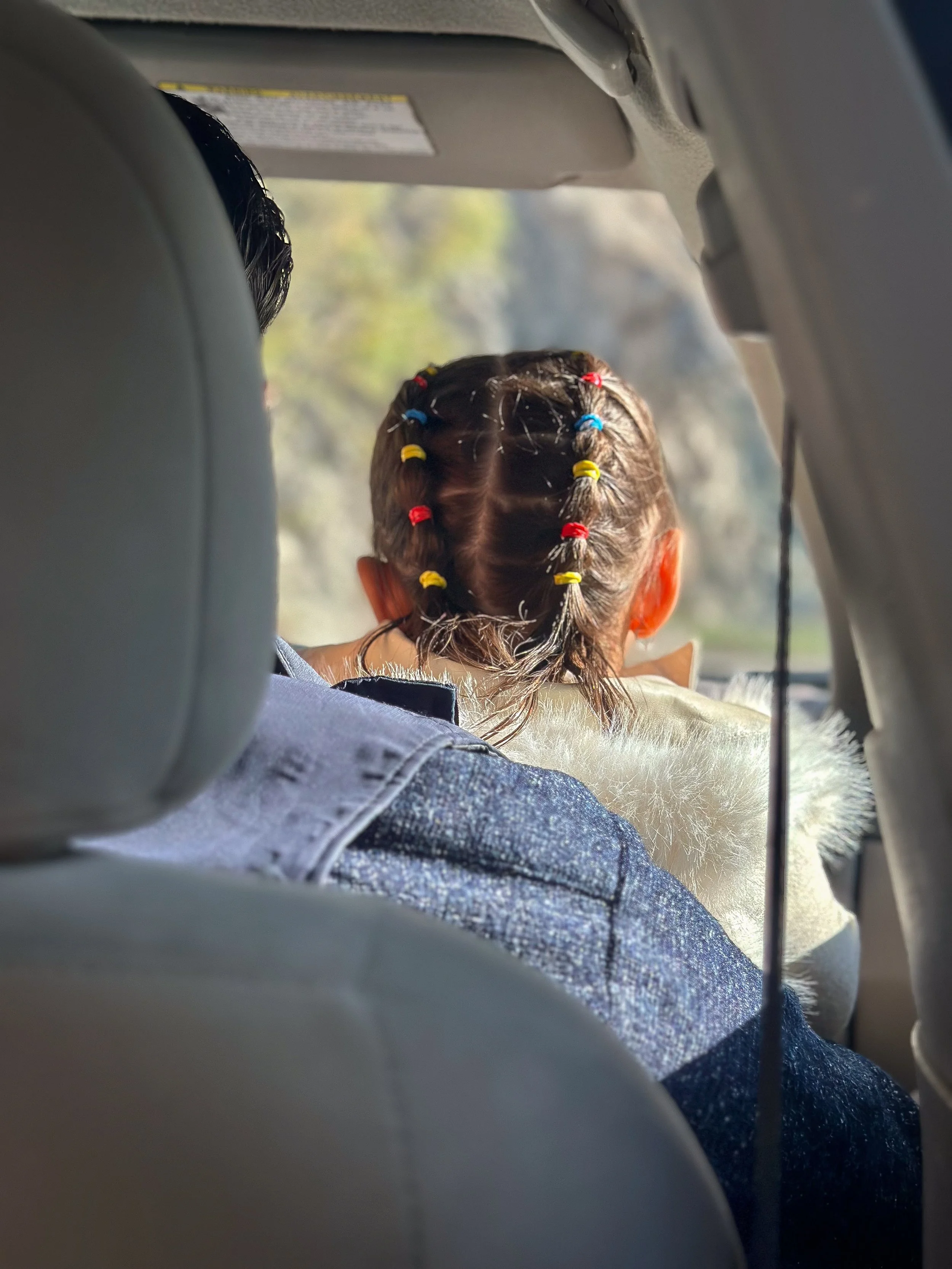
When I travel with my daughter, she is like my passport. If we travel just me and my husband, we find a lot of problems. We get stopped at many checkpoints and they will not allow us to pass. But with my daughter, she is proof that we are married and we are free to move.
Having a kid with you during this kind of trip is very tough, but we managed somehow. She likes to eat so we busied her with some fruits and snacks. The whole time she was missing her sister because they are good friends with each other. When I would give her some juices and snacks, she would divide them into two parts and tell me, “This one is for my sister, save this for my sister.”
How did traveling through different regions of Afghanistan affect the way you see the country or your place within it?
I feel like if we want to bring changes to Afghanistan, it will be very tough. Because the thoughts of many people are like the Taliban’s thoughts. Even if the government changes, how can we change the mind of people from these provinces? We need education because the problem isn’t only the government, it is the mentality. This trip showed me that to change our future, we have to change the way people think.